
Masters Application Webinar - THIS WEDNESDAY | Register now Masters Application Webinar - THIS WEDNESDAY | Register now
Full time & Part time September MSc 1 year full time, 2 years part time, 5 years flexible
Computer Science (8) Social Work (32)

About the course

Register your interest in graduate study at UCL

How can information and technology be used to transform the organisation and delivery of healthcare? Join us to find out on this programme run jointly by UCL and the University of Manchester. Studying alongside your full-time work, you’ll gain specialist expertise in a field that’s having a tangible impact on improving healthcare in the UK and internationally.

About this degree

If you want to play your part in improving healthcare by supporting organisations to make better use of information and technology, this programme is an excellent option.

Read more about this course

Entry Requirements

A minimum of an upper second-class Bachelor’s degree in a relevant discipline from a UK university or an overseas qualification of an equivalent standard. A relevant Master’s degree from an appropriately accredited institution is desirable.


Fees

UK tuition fees (2025/26)
Full-time: £16,000
Part-time: £8,000

Overseas tuition fees (2025/26)
Full-time: £36,500
Part-time: £18,250

Visit institution website Register your interest

Latest Scholarships

Where will I study?

Where is University College London

Videos


All Available Videos:
Health Informatics MSc Health Informatics MSc 17/10/2024 13:50:40
Health Informatics MSc
Welcome to the UCL Global Business School for Health (UCL GBSH) Welcome to the UCL Global Business School for Health (UCL GBSH) 06/01/2026 14:58:15
Welcome to the UCL Global Business School for...
Business Meets Healthcare: How UCL GBSH is Training the Leaders of Tomorrow | #LeaderGeneration Business Meets Healthcare: How UCL GBSH is Training the Leaders of Tomorrow | #LeaderGeneration 06/01/2026 14:58:59
Business Meets Healthcare: How UCL GBSH is Tr...
GBSH Alumni Association Reunion and Launch Event | June 2025 GBSH Alumni Association Reunion and Launch Event | June 2025 06/01/2026 14:59:30
GBSH Alumni Association Reunion and Launch Ev...

Student Profile

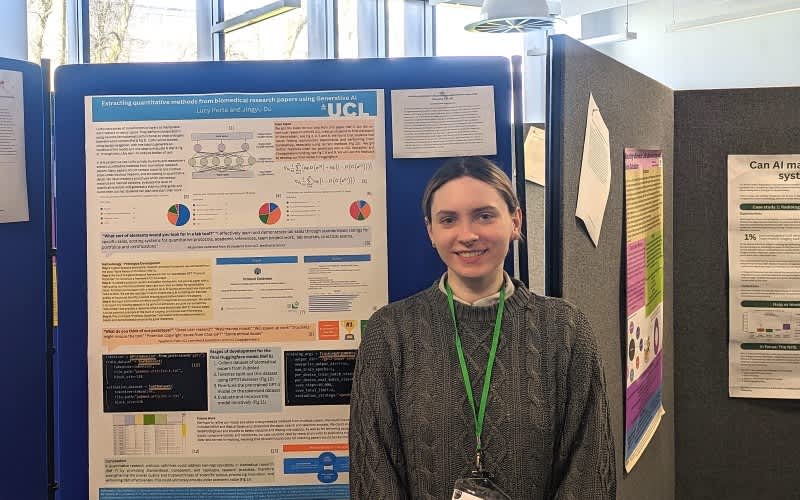
Lucy

Graduated in 2025

I've been working as a Software Engineer at The University of Manchester where I work on health technology projects. Being able to study part-time has allowed me to work completely alongside my studies while also gaining skills to further my career.

Moreover, due to the nature of the course being split between Manchester and London, you get to experience both cities and there is just so much flexibility. You can take the course full-time or part-time. You can take it almost entirely at UCL or almost entirely at Manchester.

I also found the career services really helpful because you are a student of both universities, you are able to access career advice from both. Last year, I managed to secure an internship and this year I have an offer for a graduate role and the fact that I’ve had two different sources of career advice has been a real benefit.

Search Suggestions

Based on your current searches we recommend the following search filters

Course Suggestions

Based on your current search criteria we thought you might be interested in these

Health Informatics - MSc
University of West London

Applied Statistical Modelling & Health Informatics MSc/PGDip/PGCert
King’s College London

MSc/PGDip Health Informatics
Swansea University

Last updated: 14 January 2025

Faculty of Population Health Sciences

Join the UCL Faculty of Population Health Sciences and take on the world’s most urgent health challenges. Study alongside leading researchers and apply cutting-edge methods – from clinical trials and data science to social sciences and omics – to improve lives. Our Master’s degrees span public health, global health, women’s and child health, cardiovascular science, clinical trials, and the business of health, giving you insight into how innovation shapes systems like the NHS. Your Master’s equips you to lead change, influence decision-making, and drive impact across sectors. At UCL, you’ll gain the skills, networks, and global perspective to shape a healthier future. Make your Master’s matter.

Why study at Faculty of Population Health Sciences?

UCL is ranked 4th globally for public health (ShanghaiRankings 2025), reflecting our world-leading research and teaching.

UCL is 9th in the world in the QS World University Rankings 2026.

UCL is the top choice in London for graduate employers (The Graduate Market in 2024).

Study alongside leading researchers tackling heart health, mental health, climate impacts, health inequalities, and the future of healthcare systems.

Collaborate with NHS, social care, and academic partners through UCLPartners to drive innovation and improve lives.

2000

postgraduate students

49

courses

9th

in the world (QS World University Rankings 2024)

London  United Kingdom

main campus

About Faculty of Population Health Sciences

The UCL Faculty of Population Health Sciences is dedicated to improving health and reducing inequalities through world-class research, education, and collaboration. We tackle urgent health challenges across the lifecourse – from conception and childhood to older age – working with diverse communities and focusing on areas such as heart health, cancer, mental health, climate impacts, and health systems.

Our mission is to advance population health through evidence, innovation, and action. We value interdisciplinary thinking, social justice, and real-world impact. Our eight institutes and schools bring together expertise in public health, global health, epidemiology, clinical trials, child and women’s health, health data, and the business and leadership of health.

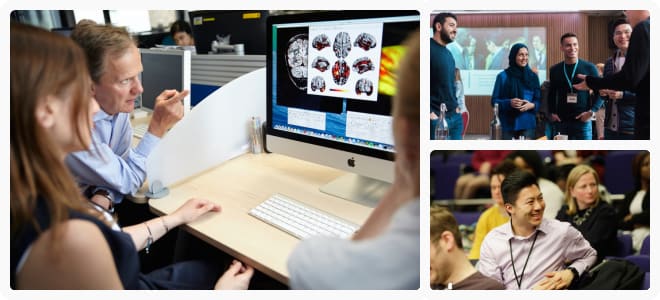
As a student, you’ll join a vibrant, research-led community in the heart of London. You’ll learn alongside leading experts, engage with NHS and industry partners, and gain the skills to lead change across sectors. Our postgraduate courses are designed to support your career goals – whether in research, policy, healthcare, or industry – and many offer opportunities for networking and practical experience. You also have access to funding support, careers, and enterprise services to help you take your next step with confidence.

Whether you’re looking to specialise, switch paths, or advance your career, our courses equip you to shape a healthier, fairer future.

Latest Scholarships


As a student in the UCL Faculty of Population Health Sciences, you’ll experience the best of campus and city life. Our Faculty is based across two vibrant locations: historic Bloomsbury, in the heart of central London, and UCL East, our new campus in Stratford’s Queen Elizabeth Olympic Park – home to UCL’s Global Business School for Health.

You’ll learn in supportive academic environments, with access to specialist spaces across our institutes that encourage hands-on learning and collaboration. These include teaching labs, seminar rooms, and resources for data science and interdisciplinary research.

Outside the classroom, UCL offers a rich student experience. You’ll be part of a diverse, global community with access to over 360 clubs and societies, cultural events, volunteering, and enterprise opportunities. London itself becomes part of your education – connecting you to leading clinical and policy institutions, including the NHS, NIHR, MRC, Wellcome Trust, NICE, and the Francis Crick and Alan Turing Institutes.

Hear what our students have to say about life at UCL


https://www.ucl.ac.uk/population-health-sciences/study/what-our-students-and-alumni-say

I've been working as a Software Engineer at The University of Manchester where I work on health technology projects. Being able to study part-time has allowed me to work completely alongside my studies while also gaining skills to further my career.

Moreover, due to the nature of the course being split between Manchester and London, you get to experience both cities and there is just so much flexibility. You can take the course full-time or part-time. You can take it almost entirely at UCL or almost entirely at Manchester.

I also found the career services really helpful because you are a student of both universities, you are able to access career advice from both. Last year, I managed to secure an internship and this year I have an offer for a graduate role and the fact that I’ve had two different sources of career advice has been a real benefit.

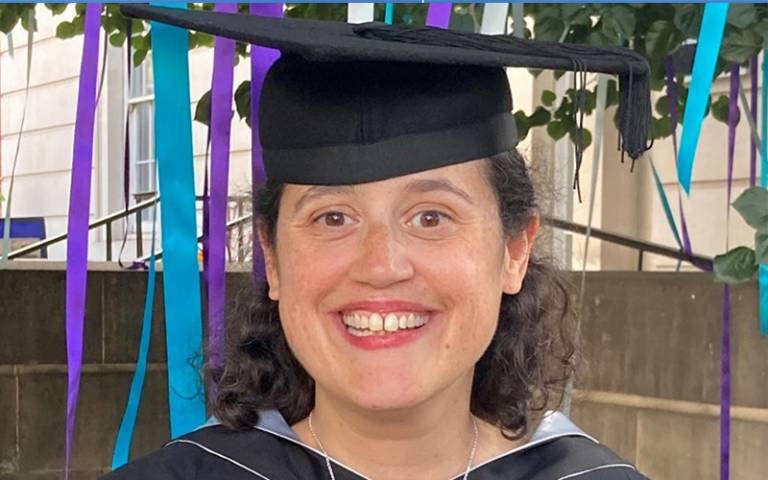
Being able to undertake an MSc in Paediatrics and Child Health (Community Child Health), with the award of the Michelle Zalkin Scholarship, gave me the thinking space in my professional career to delve deeper into aspects of child health I remain passionate about today, as a Consultant Paediatrician, such as child and young person safeguarding and adolescent medicine.

By studying for a Master's degree, I was able to nurture my thirst for developing skills in the critical appraisal of current thought, literature and scientific study in the field of child health, which in turn fed into my passion for child health advocacy. Medical training gives very little head space for this type of nurturing and the UCL GOS Institute of Child Health, with its experienced faculty, is well placed to build on this level of development for those in healthcare.

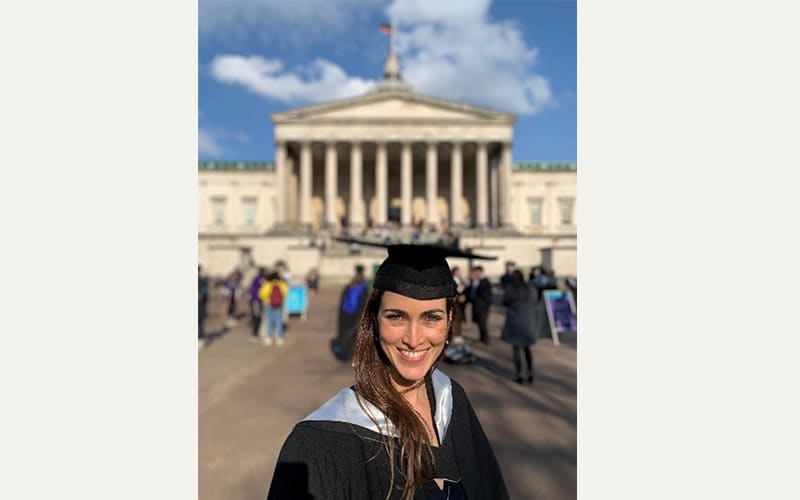
I am a Paediatric Doctor from Brazil, currently working as a Paediatric Clinical Research Fellow in the NHS. Making a positive change in society through the improvement of children’s health has always been my career objective.

During my paediatric training, I understood how quality academic research and evidence-based practice could make a real impact on children’s health and I felt the need to gain further knowledge about it. I applied for the MSc in Paediatrics and Child Health - Advanced Paediatrics at UCL, because the course was perfectly suited to accomplishing my goal.

During the MSc course, I was immersed in an inspiring multidisciplinary environment, where I could network with colleagues with different cultural and professional backgrounds and receive all the support needed to develop relevant research, teaching and leadership skills.

Undoubtedly, the MSc course was an enriching experience and a crucial stepping stone towards achieving my goal of changing society through medical practice and clinical research.

The Dental Public Health MSc at UCL helped me understand the concept of socio-economic determinants of oral health and thereby understand the impact it has over general wellbeing and vice versa. The skills that I acquired through the course set a strong foundation for my current research areas.

I now work as a public health and quantitative researcher in Bihar. 50% of the population in Bihar is considered as multidimensionally poor. I'm part of several multidisciplinary projects that aim to improve and develop the state. I use my epidemiology and applied statistics skills to understand and analyse the impact of multidimensional determinants of health.

I'm grateful for the opportunity to have pursued a degree in personalised medicine and entrepreneurship, which has had a profound impact on my career path. These two modules equipped me with the tools and mindset needed to think more broadly and creatively about healthcare challenges.

I'm proud to be a co-founder at Your Cue, a health tech startup that is revolutionizing the way patients receive care. Our innovative finger-based wearable continuously monitors a patient's vital signs, providing seamless, around-the-clock monitoring from anywhere - whether in a hospital, at home, or on the go.

My degree has given me a new perspective on healthcare, and the importance of personalised medicine. We are all unique individuals, and personalised healthcare is the key to unlocking better health outcomes for everyone. I'm excited to continue exploring new ideas and opportunities to make a positive impact on the healthcare industry, and I credit much of my success to the excellent education I received.

I came from a Pharmacology background and my undergraduate university research project focused on the cardiotoxicity of chemotherapy drugs. I am also very passionate about certain cardiovascular diseases, so I knew that I wanted to study cardiovascular disease further as a Master's course. The programme provided further breadth and depth in cardiovascular science, which extended through to my research project.

Additionally, I wanted to go into the clinical aspects and the course provides clinical applications of cardiovascular science as well as scientific advances.

I have successfully secured a place in the NHS Scientists Training Programme specialising in Cardiac Science. After my undergraduate studies, my initial application was unsuccessful. However, completing this Master’s programme has solidified my career path and strengthened my application, leading to my success this time around.

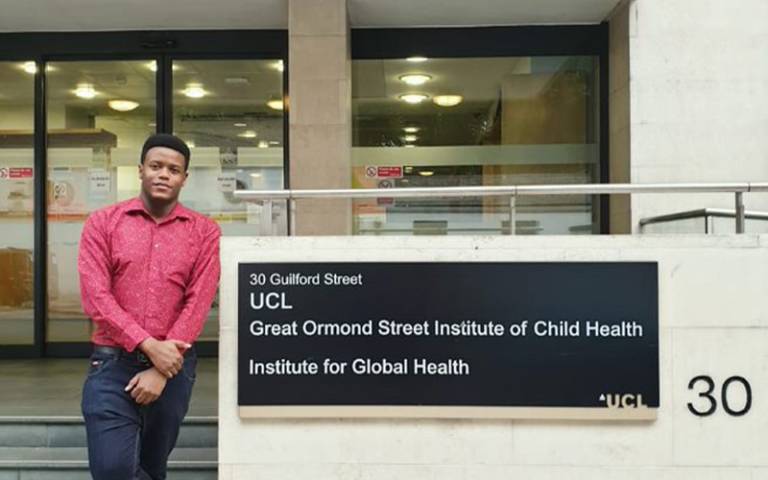
During my time at UCL, first and foremost, I appreciated the support I received from both the IGH academic and administrative personnel, who provided very useful advice on my studies, especially on the complex modules I selected, career prospects, and even personal matters when necessary. I also loved the UCL learning approach, which consisted of lectures, seminars, and workshops that create a supportive environment for each student to pursue their academic curiosity, contribute to knowledge, express opinions and share experiences. UCL has provided grounds for me to make friends from all over the world who I hope will remain a part of my social and professional network for the rest of my life.

After completing my MSc and earning a distinction in my dissertation, I applied for a competitive internship position with the prestigious World Health Organization's SDG3 Global Action Plan Secretariat. After successfully passing their interview procedure, I was accepted into their internship programme, which would be held in Geneva, Switzerland. My primary role will be to use my technical, interpersonal, and intrapersonal skills to strengthen collaboration between the largest global health actors in order to accelerate progress towards the health-related Sustainable Development Goals (SDGs) targets, particularly for the Low and Middle-Income Countries (LMICs) to reduce inefficiencies.

Prior to studying for my MSc, I was working as a medical officer in a general hospital, but my interest was specifically in child health. Notwithstanding this, I was not ready to do a paediatric residency. During my practice in Nigeria, I observed that the main killers of children were common illnesses that could be prevented or easily treated, thus prompting a desire in me to understand more about global child health.

I found out about the MSc in Paediatrics and Child Health (Global Child Health) during my search and quest to improve my career in child health. Through the Peter and Loek Wheeler scholarship, I got the opportunity to come to UCL to gain a world-class education.

Upon my return to Nigeria, I was immediately transferred to the Children Specialist hospital which is the only children-only hospital in my state. On a daily basis, an average of 100 children present to the hospital with cases such as malaria, measles, malnutrition, bronchopneumonia and other diseases. My goal is to do more research to help guide public health programmes to reach even more children, especially those in rural areas in Nigeria.

As an undergraduate at Yale, I developed an interest in the multidisciplinary nature of health and medicine, specifically pertaining to culture, religion and gender, and was specifically looking for programmes committed to integrating such fields in an interdisciplinary nature. UCL's MSc in Population Health seemed ideal, considering the academic coursework would allow me flexibility in taking a wide array of courses within the span of a year, from classes on health policy to ethnicity, migration and health. I was also attracted to the programme's location in the heart of London; with an international student body and faculty, I felt that UCL's programme would challenge my previous conceptions of health in the United States, and would also allow me more opportunities to engage with the niche populations I'm interested in studying. I've found from the past few months that this is exceptionally true: since coming to UCL, I've had the ability to work with health projects invested in Muslim women, to learning about pediatric health in South Asian communities from guest lecturers in my classes – experiences I dreamt of when imagining my future Master's programme.

After working in the NHS for a few years in clinical research, I am currently self-employed. Since becoming free-lance, I have worked as a CRA (clinical research associate), trial manager and also work with companies that need advice navigating the UK clinical research environment.

Although I was already working in the field for 2 years, having career switched from organic chemistry, the MSc provided a strong theoretical and academic background that I was lacking in clinical and medical research. In addition, the degree also focuses on the 'nuts-and-bolts' involved in running a trial so being able to bounce off practical questions to colleagues on the course and tutors was equally invaluable. Both of these aspects of my degree have helped me progress in my career and would have been quite difficult, without a more lengthy timeframe, to achieve.

Before entering UCL, I had no prior knowledge of research and lacked experience in a laboratory setting. Fortunately, the programme I chose provided me with the opportunity to acquire knowledge and learn about research methods and lab work. All of the professors and lecturers have been instrumental in providing me with valuable insights into the field of reproductive science and women's health, ultimately shaping my journey to where I am today.

Choosing the path of a Ph.D. and the academic route has undoubtedly become the highlight of my career. As a medical doctor, my initial focus had solely been on becoming a clinician. However, upon entering UCL and pursuing my master's, I had the opportunity to reevaluate my career trajectory. Meeting inspirational supervisors, including Dr. Kimberley Botting, Prof. Anna David, and the team, made me realize that being a successful clinician requires strong research skills. The dynamic nature of medicine demands a continuous commitment to evolving knowledge, and this dual role as a researcher and clinician has enriched my professional journey.

I chose the Women's Health MSc at UCL partly because of the university's great global reputation, but also because it was a programme that could be modified in a way to cater to personal preferences, which allowed me to focus more on the fertility and reproduction aspects of women’s health, while learning more about research fundamentals. I learned a lot about conducting research, interpreting and presenting it, and was exposed to a lot more beyond the clinical aspects of fertility care, including policy, which I was immediately attracted to. My UCL degree allowed me to learn about different career options in this space, and I was able to start a role at UK fertility regulator, the Human Fertilisation and Embryology Authority (HFEA). Spending two years in regulatory policy allowed to to transition to my current role in health policy and insights where I am able to apply everything I learned in a way that makes real impact.

I really enjoyed the group work in one of our modules (Fundamental Principles of Infection and Population Health) where we were given a scenario and had to work through the problem at hand, whilst collaborating with team members. I enjoyed being able to translate the knowledge from lectures into a real-life problem and being given the resources to tackle this, whilst working in a team and learning from each other. I often remember this project and how it developed throughout the term, with great memories of the group work.

The degree provided me with the epidemiological skills and knowledge to work in epidemiology, particularly because the programme gave us the opportunity to apply knowledge to real-life problems. I was able to take the wealth of knowledge and skills and translate that effectively to my current work.

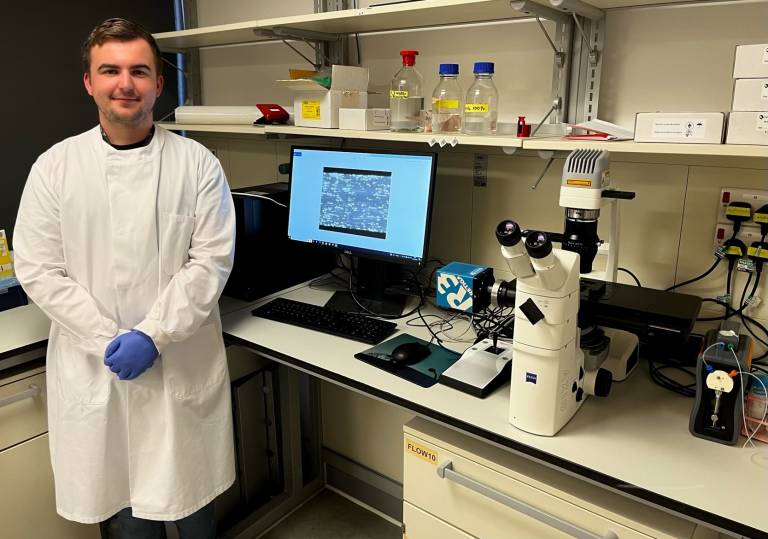
My first degree was in Mathematics, also in London. I found my current programme while I was searching for Data Science MScs, and it just caught my imagination - I liked that it had a hard focus on electronic health research and clear applications, which I was missing during my BSc. Data Science itself was a good fit for me. It's a good mix of domain knowledge and mathematical/programming skills, so it opens up a lot of options for where to go next.

You get experience with using Python for data management and analysis, and statistical training from t-tests through to cox regression. Most of your lecturers will be active researchers in epidemiology, statistics or data science, so it's well-backed by references to literature and the applications to healthcare. Optional bits focus on wider awareness - machine learning methods in more detail, or database management, or statistics for genetics.

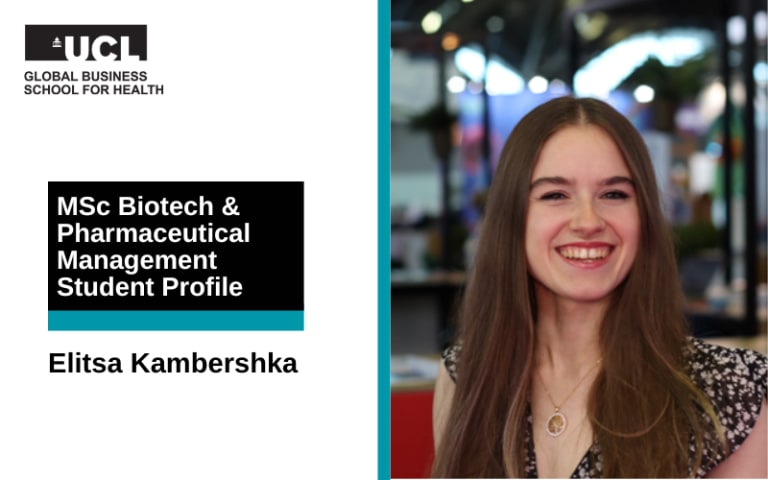
The breadth of topics covered during the programme, from pharmacoeconomics to marketing and supply chain management, has given me a comprehensive view of operations and management within the biotech and pharma industry, enhancing my employability. This has also allowed me to acquire and improve upon multiple soft skills which are highly valued in today’s job market like teamwork, problem-solving, and presentation abilities, as well as hard skills like data analysis.

UCL and GBSH offer a wide range of opportunities and tools available to help you advance your career, such as workshops and masterclasses provided by employers, as well as sessions dedicated to enhancing CVs, cover letters, and interview skills. There are also many guest talks where there is ample opportunity for networking, a skill I highly recommend cultivating! Keep an eye out for exclusive opportunities for more long-term career development, such as part-time roles. For example, through the UCL Sustainability Lab, I was able to join as a Research Analyst for a global consulting company!

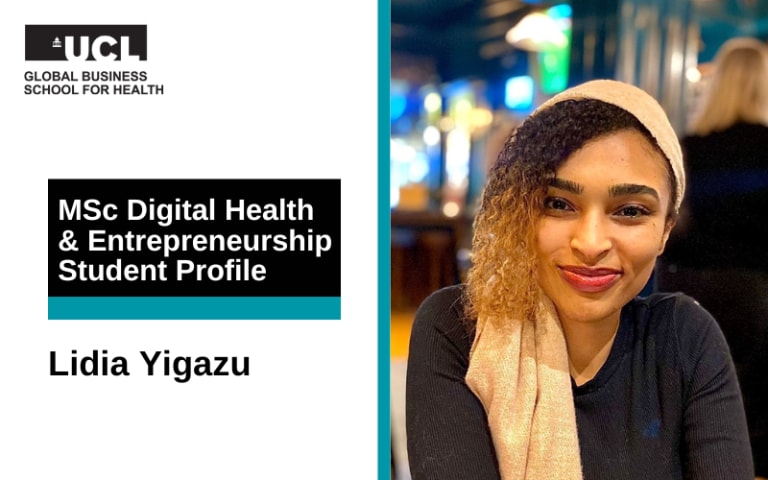
I have always been interested in Business and Entrepreneurship and I wasn't sure how to change my career from being a clinician into something business related and the MSc in Digital Health and Entrepreneurship seemed like the perfect blend of both worlds. What drew me to the UK, specifically UCL, was the condensed one-year format of the course. It just felt like the ideal opportunity to dive into this exciting course without sacrificing too much time.

I'd have to say my two favourite modules are Digital Health AI and Health Startups. The AI course is particularly exciting due to its relevance; the skills I gained there have immediate real-world applications. It not only gives us a competitive edge in the job market, but it's also incredibly hands-on—I get to do cool things like building a chatbot.

Health Startups is another course I loved, it resonates with me as I see myself working in the startup space. The course provided valuable insights into the fundamentals of a successful business, the biggest mistakes startups make, and current trends in digital health startups. Additionally, the encouragement and support I received from my professors in that course were exceptional - Shout out to Hassan and Massoid!

I chose to study at UCL because it is a highly reputable university in the world with a strong reputation in the field of public health, ranked 6th globally based on the 2023 Shanghai ranking. UCL’s public health programme is unique as it is designed to provide students with a solid grounding in the key concepts and skills of public health such as epidemiology, health leadership, and health policy, preparing students for diverse career opportunities.

I would like to pursue a career in health protection and epidemiology with government agencies, UN agencies, and non-profit organizations in the developing world, where I will be able to take more active roles in the prevention, preparedness, and control of public health emergencies.

Based in Stoke-on-Trent, Jawaad is in his fifth and final year of specialty training in Clinical Radiology, having completed foundation training in North West London and medical school in Cambridge and Oxford. Alongside his clinical work, he is the creator of a popular on-call assistant app called smartDr and maintain a growing interest in the health tech industry, having recently completed the BiteLabs Health tech and Innovation Fellowship. He hopes to further develop his skillset through the Executive MBA Health course with a view to driving innovation within the healthcare sector.

Oshani is a registrar doctor in Infectious Diseases and Microbiology in London with a dedicated interest in global health, healthcare systems, and addressing antimicrobial resistance (AMR). Alongside her work with Médecins Sans Frontières, she has been involved in teaching and leadership, contributing to the education and guidance of junior doctors. She is currently pursuing an Executive MBA in Healthcare at UCL’s Global Business School for Health, seeking to broaden her understanding of healthcare systems and their management. With a vision to engage in further research related to AMR, she aims to play a role in shaping practical and sustainable healthcare solutions.


If you are UK national, Republic of Ireland national, a citizen of a Crown Dependency or have Pre-settled or Settled status you will not require a visa to study at UCL. Most other students will usually require a student visa to study at UCL if they are coming to study in the UK for more than 6 months. However, a number of different UK visas will still allow you to study in the UK so please visit our student visa webpages to check which visa you will need.

Applications are considered on a rolling basis and therefore may close earlier than the advertised deadline. We recommend that you submit your application as soon as possible. Please refer to a programme’s prospectus page for the application deadline.

We know applying for courses can be daunting, so we’ve made this guide (https://www.ucl.ac.uk/prospective-students/graduate/taught-degrees/applying-graduate-taught-study-ucl?utm_source=findamasters&utm_medium=affiliate&utm_campaign=117427_phs_pgt_2024&utm_content=department_profile) to help you through. Please note: you can only apply to a maximum of two taught graduate programmes in any academic cycle.

The English language requirements for a programme are stated on the programme’s prospectus page. You may be required to meet one of UCL’s five levels of English language proficiency, or obtain specific scores in a UCL-recognised test. UCL’s English language policy details all of the ways in which you can meet the minimum English language requirement for your chosen programme of study.


Main campus

University College London

London

United Kingdom

Courses at Faculty of Population Health Sciences