
Masters Application Webinar - THIS WEDNESDAY | Register now Masters Application Webinar - THIS WEDNESDAY | Register now
Full time September MSc 1 year full time
Biological Sciences (4) Engineering (12)

About the course

Register your interest in graduate study at UCL

Join this one-year, internationally recognised MSc to delve into the latest life science discoveries such as novel stem cell therapy, and how these are translated into commercial production. This programme offers the ideal foundation for a career in pharma or biotech. 

About this degree

Rapid advancements in the life sciences have created a need for highly-skilled graduates who have the technical skills and knowledge relevant to modern industrial bioprocesses.

Read more about this course

Entry Requirements

Normal entry requirements are at least a second-class Bachelor's degree from a UK university or the equivalent from an approved overseas institution. Candidates offering recent industrial experience are also encouraged to apply. As with any engineering discipline numeracy skills are important for the quantitative description of biological and physical phenomena. Evidence of numerical ability is requested as either an A level in Mathematics (or in exceptional cases, in Physics) or some mathematics studied at university. The department provides mathematics tutoring for Master's students throughout the year adjusted to a candidate's ability.


Fees

UK tuition fees (2025/26)
Full-time: £20,500

Overseas tuition fees (2025/26)
Full-time: £39,800
Visit institution website Register your interest

Latest Scholarships

Where will I study?

Where is University College London

Videos


Search Suggestions

Based on your current searches we recommend the following search filters

Course Suggestions

Based on your current search criteria we thought you might be interested in these

Chemical and Biochemical Engineering MSc
University of Limerick

Engineering Doctorate in Advanced Manufacturing
University of Strathclyde

Design Engineering MSc
University of Strathclyde

Last updated: 13 January 2025

Faculty of Engineering Sciences

Welcome to the UCL Faculty of Engineering Sciences! Studying a postgraduate degree with us means getting the skills needed to change the world. We’re acknowledged as a world-leading institution and you’ll benefit from our excellence in teaching and research, our outstanding facilities in the heart of London and the superior career prospects we offer our students. We offer a huge range of programmes and courses across the spectrum of engineering disciplines – including mechanical, healthcare, electric, chemical, biochemical, civil, structural and environmental. We also incorporate teaching beyond traditional engineering, including management, crime science, computer science, and engineering and public policy. We are a uniquely multidisciplinary faculty, and this drives our innovation, our progressive pedagogical approach, and our commitment to solving the world’s toughest challenges.

Why study at Faculty of Engineering Sciences?

Learn from pioneers. UCL delivers firsts – including the first departments of mechanical engineering, biochemical engineering, and security and crime science in the country. We were the first university in the world to introduce engineering laboratories.

Industry partnerships and connections. UCL Engineering is proud to work in partnership with world leaders across a wide range of industries. Many of our programmes involve working alongside practitioners and experts from our industry partners.

Real world research impact. Whether we’re setting the world record for the fastest data transmission rate, or helping scale up the manufacturing of the COVID-19 vaccine, the impact of our research continues to be felt all over the planet.

3500

postgraduate students

87

courses

9th

globally in the latest QS World University Rankings (2026)

London  United Kingdom

main campus

About Faculty of Engineering Sciences

We have been shaping the world we live in since 1874. The discovery of noble gases. The invention of the thermionic valve by our first electrical engineering professor and the founder of modern electronics, Sir Ambrose Fleming. The Nobel Prize-winning development of fibre optic technology.

Now it’s your turn. Studying with us means joining staff and students from over 120 different countries, who are helping to create the tools to solve the most profound challenges facing our communities, our economies and our planet. Our range of postgraduate courses can take you anywhere, from the navigation of space shuttles and satellites, to the excavation of underground networks and seismic design.

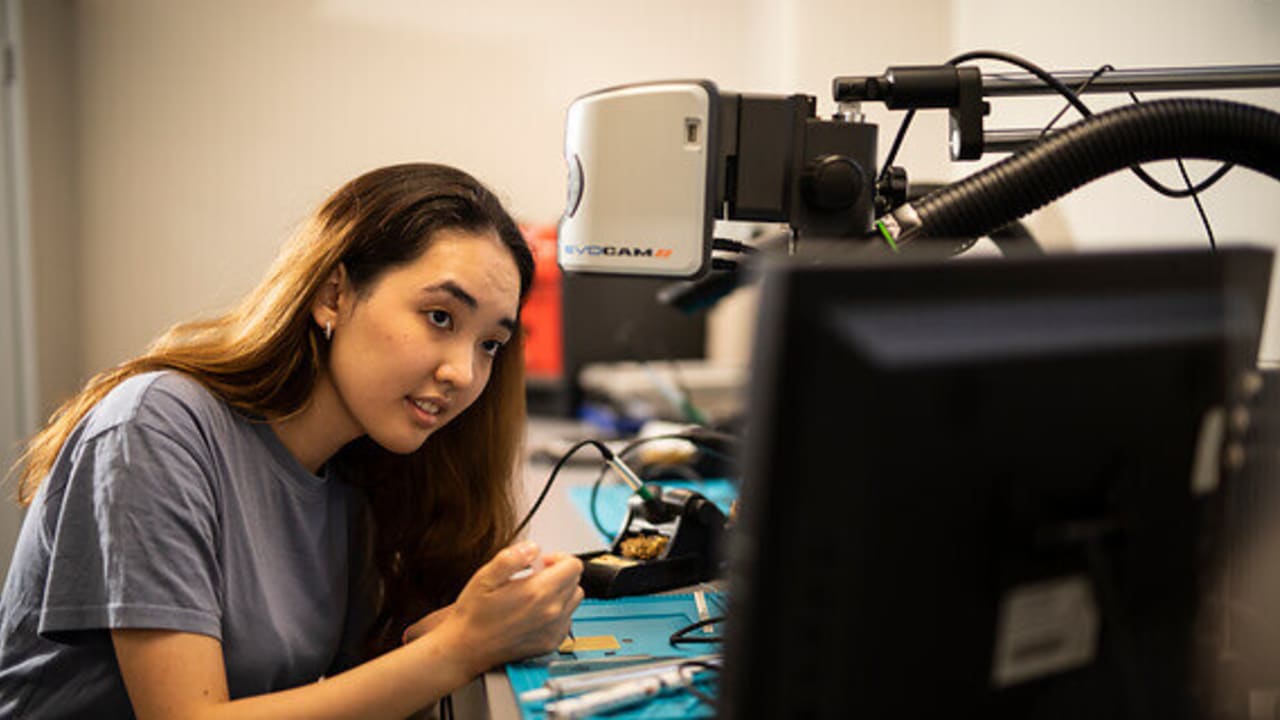
You’ll learn with us in lots of different ways. You’ll attend lectures, small-group tutorials, workshops, problem-based learning activities, interactive seminars and laboratory practicals. Depending on your course, you’ll dive into real-life industry case studies or receive teaching from industry experts.

There’s a big emphasis on transferable skills too, like communication, creativity, project management, leadership and critical thinking – which, when coupled with your technical expertise, will make you highly sought after for jobs.

Latest Scholarships


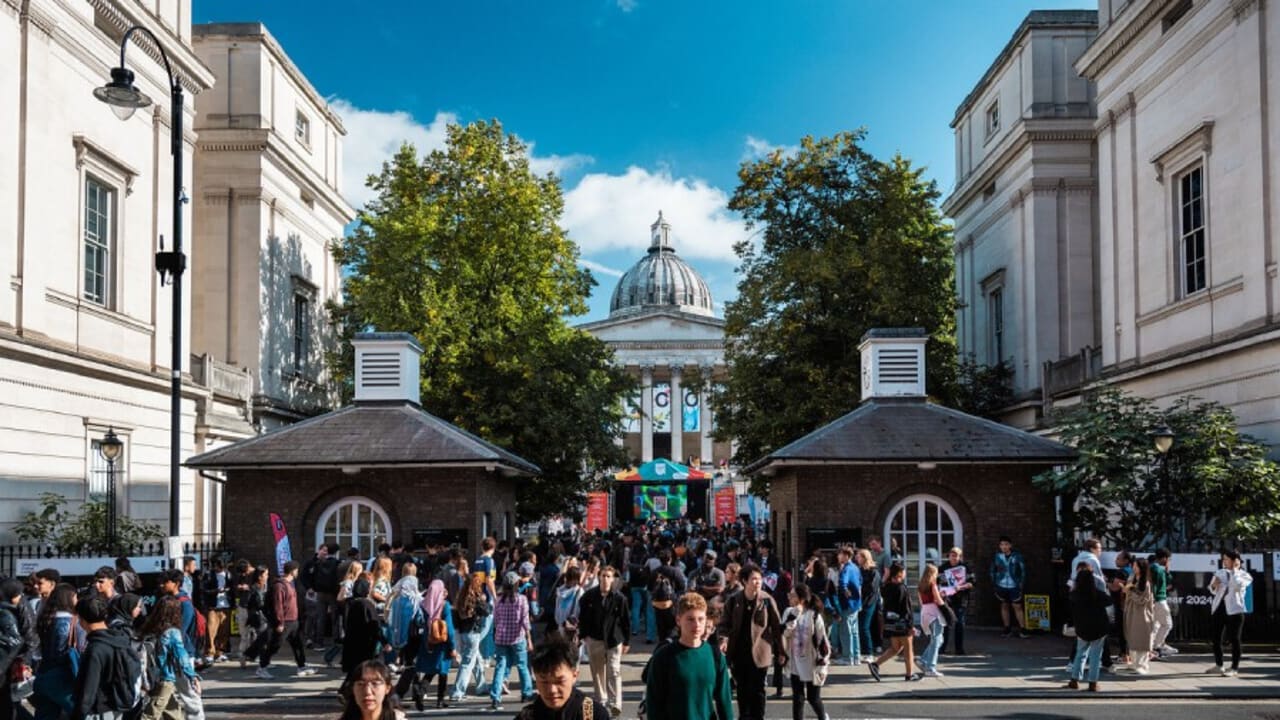
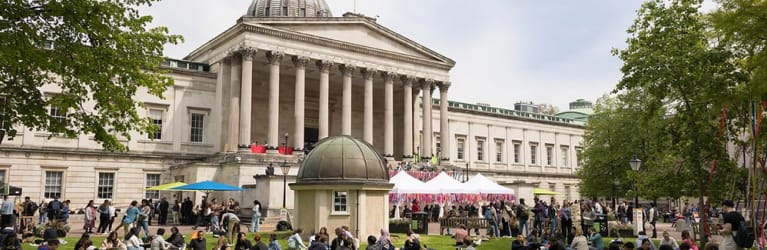
We are located in the heart of London, which is consistently ranked in the top 3 student cities in the world (QS Best Student Cities, 2017 – 2026). This means that access to UCL’s state-of-the-art Bloomsbury and East campuses are complemented by proximity to famous museums and galleries, esteemed libraries and professional associations, and first-rate entertainment and nightlife. UCL Students’ Union has over 300 clubs and societies, so there’s always the opportunity to pick up a new hobby or meet new people. There are lots of active Engineering-specific societies, including the Engineering Society, Fleming Society, UCL Racing, the AI Society, the Healthcare Innovation Society and so many more. The Union provides sports, fitness, and entertainment facilities, as well as specialist advice and support. UCL Support and Wellbeing Services also have a team of wellbeing, disability and mental health experts on hand. Equality, diversity, and inclusion are fundamental to the ethos of UCL. We were the first university in England to admit women students on equal terms with men in 1878, and we are proud to be London’s Global University, with students from 150 countries and 400,000 alumni worldwide. We encourage open-mindedness: you will learn how to think, not what to think.


Visit our website for details on financial support available to UCL students. For financial aid options that are specific to a department or programme, please consult the funding pages on our departments’ dedicated websites.

Applications are considered on a rolling basis and therefore may close earlier than the advertised deadline. We recommend that you submit your application as soon as possible. Please refer to your preferred programme’s prospectus page for the application deadline.

If you are UK national, Republic of Ireland national, a citizen of a Crown Dependency, or have Pre-settled or Settled status, you will not require a visa to study at UCL. Most other students will usually require a Student Visa to study at UCL if they are coming to study in the UK for more than 6 months. For more information, you can visit our Immigration and Visas pages.

UCL Careers is a dedicated team of experienced career professionals, providing support to all current UCL students, researchers, and recent graduates to ensure success in their future careers. Visit our website to find out more about UCL Careers.


Main campus

University College London

London

United Kingdom

Courses at Faculty of Engineering Sciences